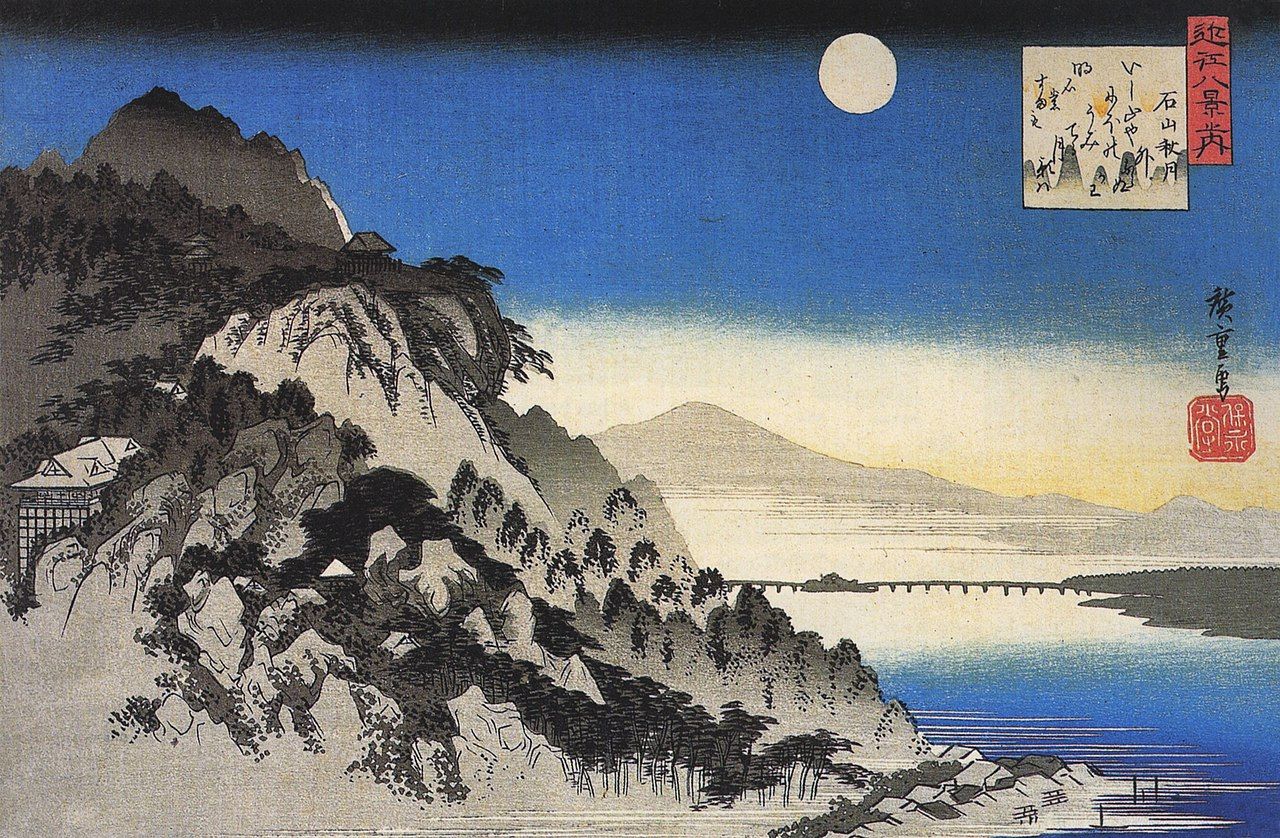

The Eight Views of Ōmi are a set of traditional scenic views set across Shiga. Inspired by the Eight Views of Xiaoxiang, these views inspired numerous artists to create a set of paintings based on them, including works created by the last great master of ukiyo-e, Hiroshige. Each individual view is incredibly beautiful, and through this series, we will showcase each of these views, and how you can experience the beauty that inspired Hiroshige to create these works. Today, we will be showcasing the Autumn Moon at Ishiyama.
Autumn Moon as Ishiyama showcases the full moon over Lake Biwa, with a view of mountains on the left side of the image. The Seta no Karehashi is also present, with the setting sun creating a pale yellow glow that draws your eyes to the mountain in the background. The view also features Ishiyama-dera on the side of the mountain, adding to the tranquility of the image. Ishiyama-dera is one of the oldest temples outside of Nara and Kyoto, being founded by Rōben at the request of Emperor Shōmu in the year 747. Ishiyama-dera also is home to two National Treasures of Japan, with the Tahōtō and the Main Hall receiving this designation. Similarly, it is the thirteenth stop on the Saigoku Kannon Pilgrimage route.
How to get to this view: Take the JR Biwako Line to Zeze Station. Once you arrive, walk to Keihan Zeze Station, which is in front of Zeze Station itself. There, board the Keihan Ishiyama Sakamoto Line to Ishiyamadera Station. From there, it is about a 10 minute walk.

JCMU Application
Portal

Advising
Appointments

Stories &
Testimonials

Program Alerts &
Announcements