One aspect of Shiga that isn’t talked about nearly as much as it should be is the unique foods of the prefecture. With the prefecture’s location on Lake Biwa, it has allowed for a unique food culture to develop. In several classes of mine, I have been told about how food is the window to the soul of various areas. When I embarked on my homestay, I had the chance to indulge in a wide variety of Shiga specialties, including grilled mackerel, red konnyaku, and funazushi to name a few. Each item, though drastically different from one another, created a story of what Shiga is all about. In this article, we will introduce you to the characters that make up this gastronomic story, as well as encourage you to indulge in these local delicacies yourself.
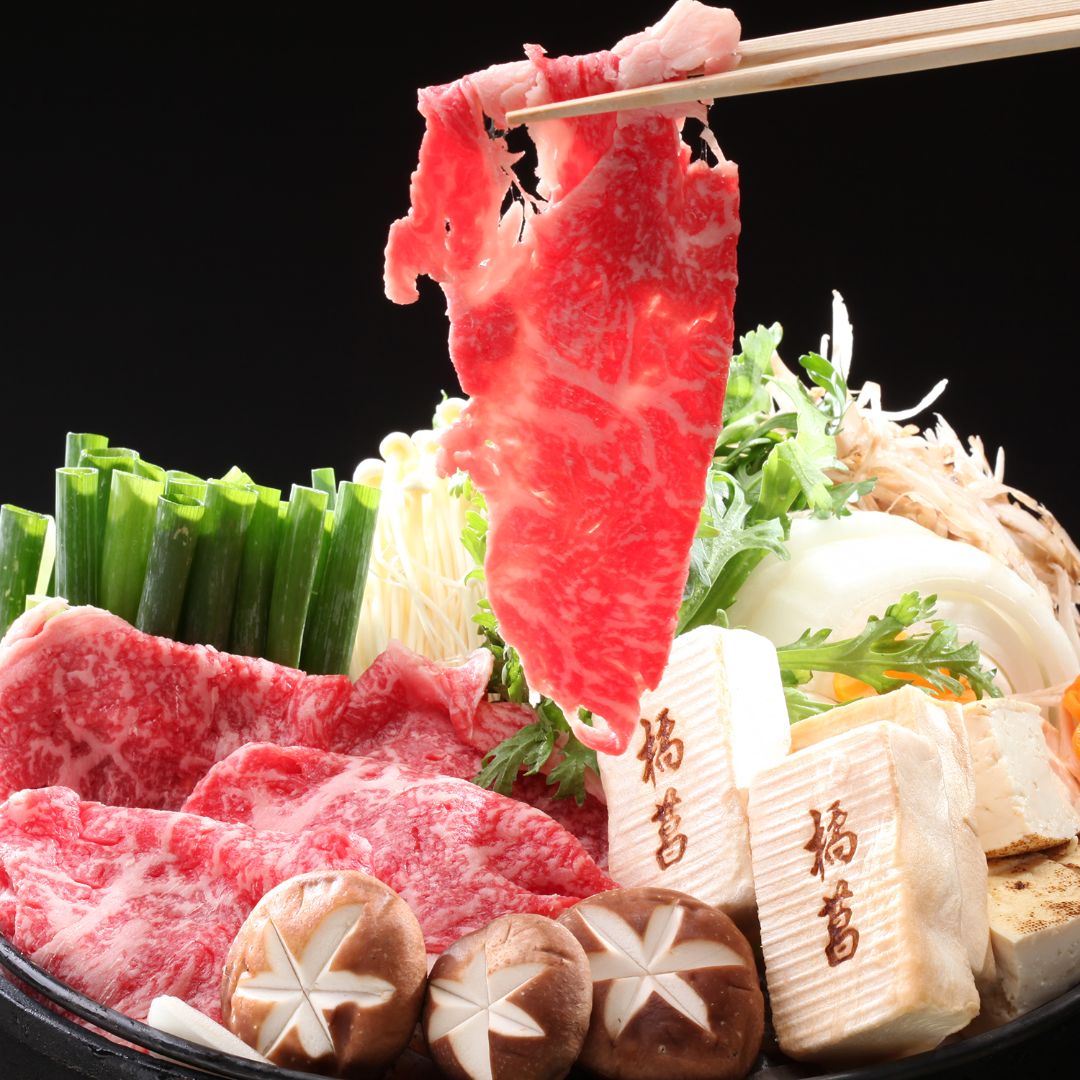
One of the top three brands of wagyu alongside Kobe-gyu and Matsusaka-gyu, Ōmi beef (or Ōmi-gyu) is one of the pride and joys of Shiga prefecture. Ōmi beef is considered to be the oldest brand of beef in Japan, with ties back to the Azuchi-Momoyama period, when Takayama Ukon treated some of the warlords of Ōmi Province to beef. Initially, it was sold as Kobe beef because the beef went through Kobe Port to reach Tokyo, but now it is widely known as its own brand of beef.
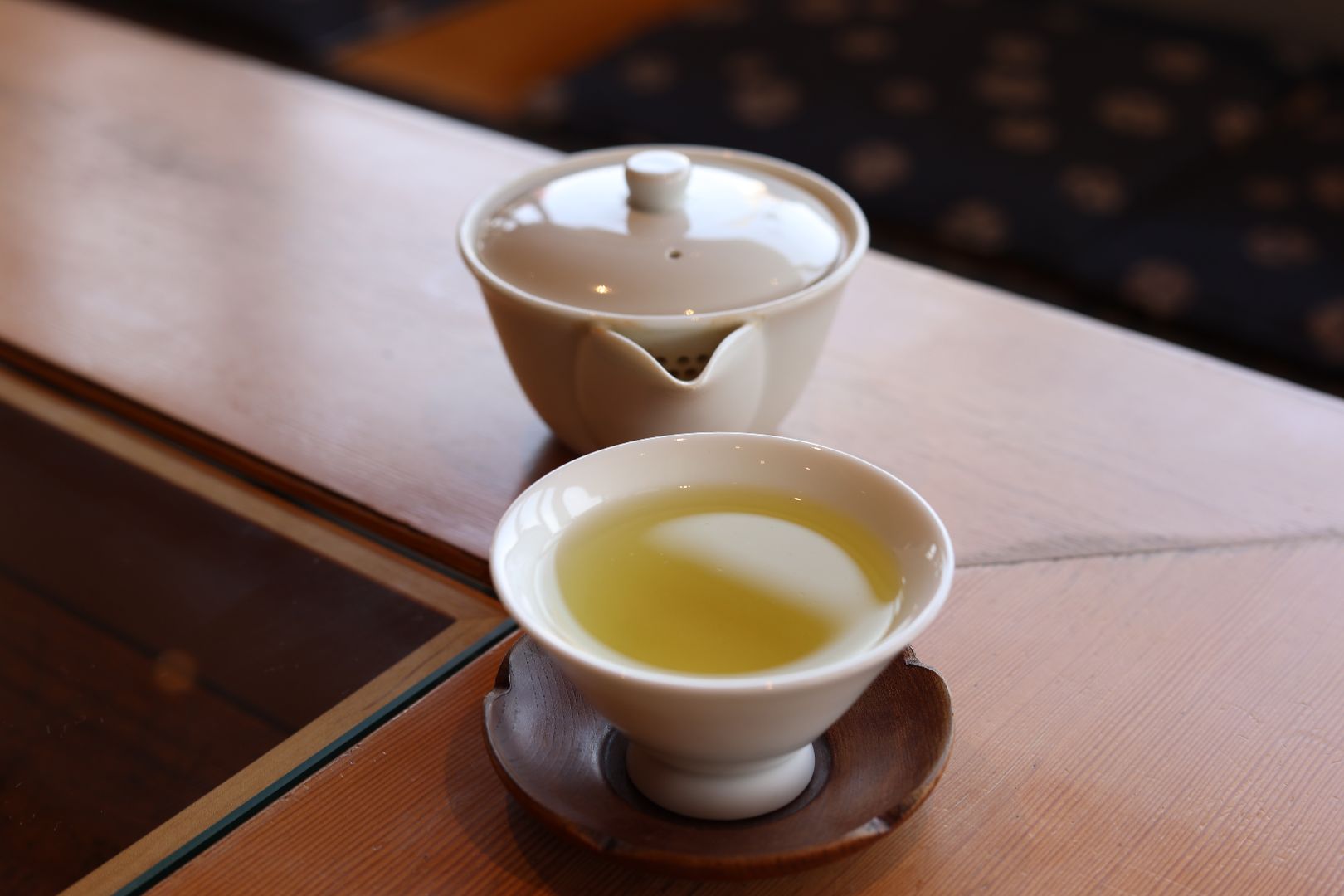
It is said that during the early Heian period, the founder of Enryakuji, Saicho, brought back tea seeds from the Tang dynasty, and sown them at the base of Mt. Hiei. A tea garden near Hiyoshi Taisha Shrine is said to be from this period, as well as the birthplace of the Japanese tea industry. The Tsuchiyama area of Kōka is where the largest production of tea is within Shiga, but the Asamiya area of Shigaraki in Kōka and Mandokoro in Higashiōmi are also well known tea hubs. Asamiya tea is actually considered to be one of the five best teas in all of Japan.
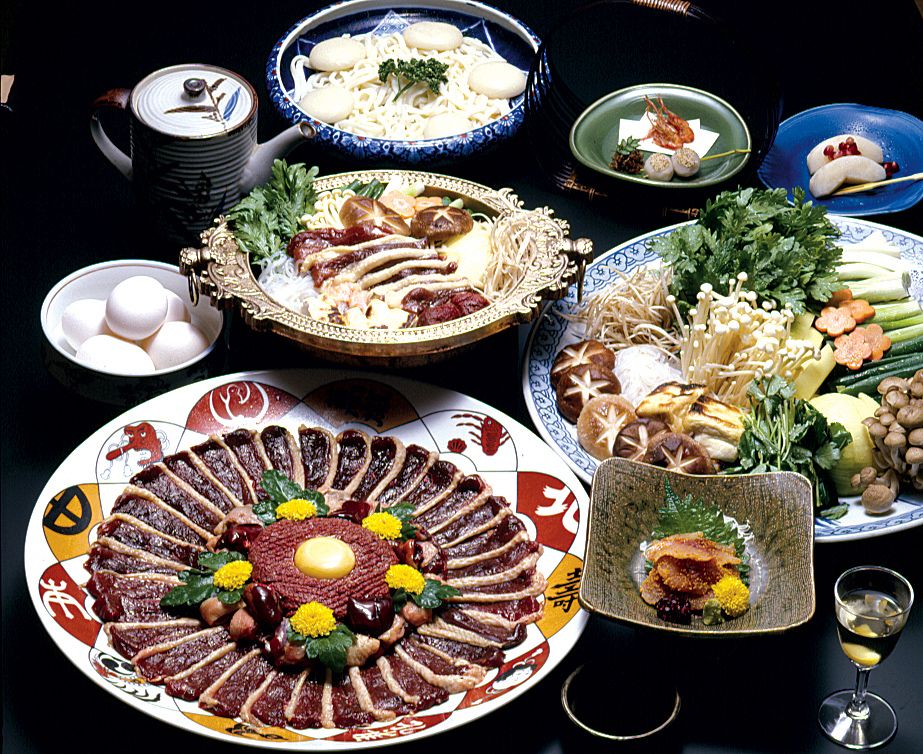
A local specialty primarily eaten during the winter, kamonabe is a hotpot-like dish made with duck, leeks, tofu, mushrooms and more. The fish in Lake Biwa attracted migratory birds from Russia, which is likely how the dish got its start. This dish is only available in the period from November to March, as this is when the hunting of ducks is allowed, but farm-raised duck is becoming more common.
One of the most traditional dishes of Shiga is the predecessor to sushi, known as funazushi. This dish is typically made using carp, which is then salted and fermented in rice over long periods of time and cut into thin strips. This dish, while considered the origin of sushi in Japan, carries a very distinct flavor and texture with the fish having grown soft in texture over the fermentation period and aquiring a flavor often compared to that of cheese. While sushi can be found all over Japan, funazushi has been synonymous with the Shiga region for hundreds of years and is considered a unique specialty of the area.
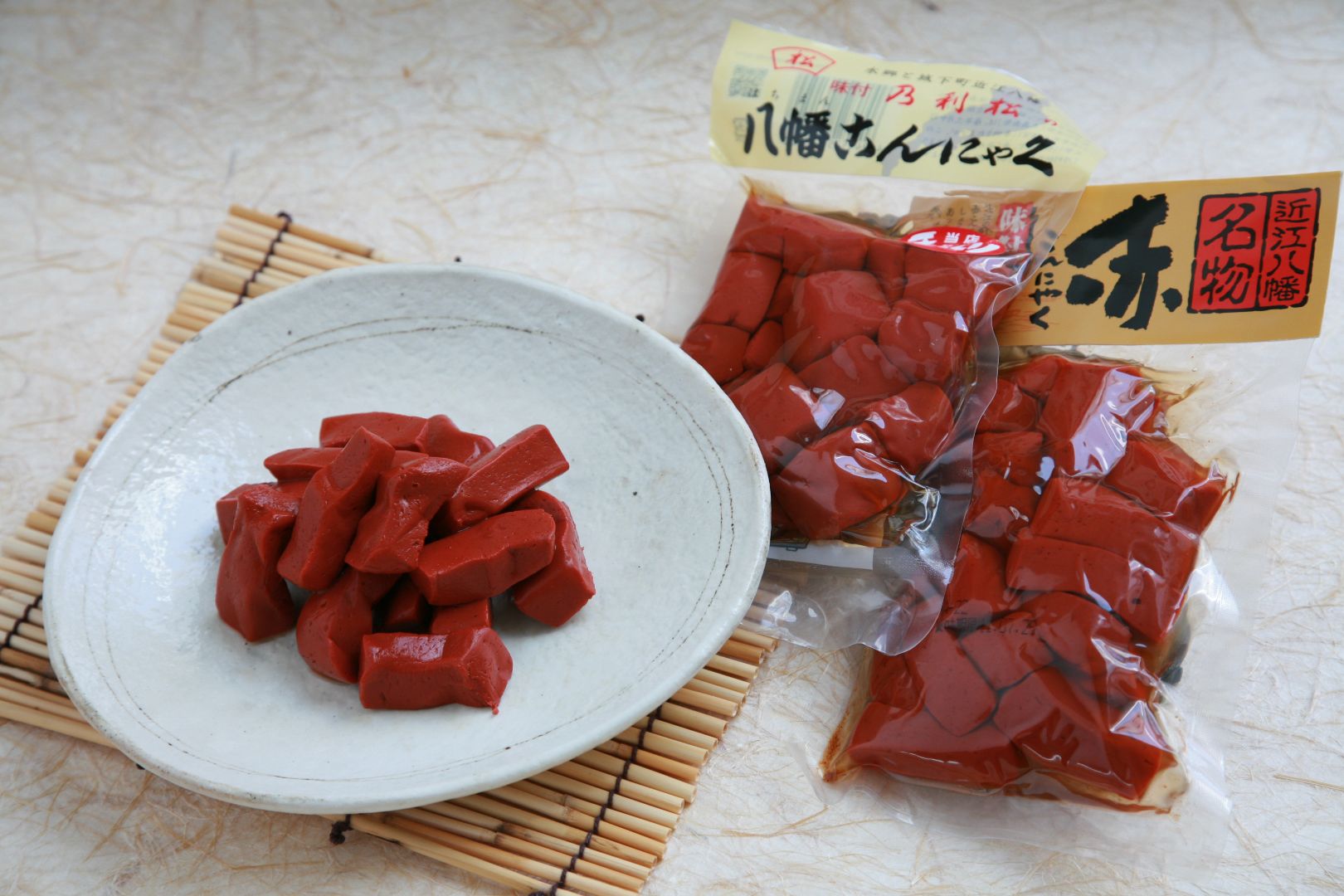
Unlike other items in this list, this item isn’t a full dish, but rather one item that is made into other dishes. This item is also a specialty of just one city, Ōmihachiman. The red color of the konnyaku is the only thing that separates it from other kinds of konnyaku. While numerous theories have been shared around how this konnyaku got its color, the most prominent one is that it got its color from Oda Nobunaga’s fiery personality. Flavor-wise, red konnyaku doesn’t taste different from standard konnyaku, but it is one of the prides of Ōmihachiman.
Being a prefecture surrounding a lake, a staple dish with fish is something that is expected. A staple of the Kohoku area of Nagahama, the dish got its start as mothers would make this dish to give to their daughters who married into farming families, as dried, grilled mackerel was a food that was both nutritious and could last a long time.
Any list of food items would feel incomplete without the inclusion of a desert item. Decchi-yokan is a jelly-like desert made from red bean paste. The desert is then wrapped in bamboo skin and steamed, which is then eaten as is. The desert’s name comes from the decchi, a group of boys from Ōmihachiman who worked as apprentices in Tokyo or Osaka, who would buy this sweet as a souvenir to have a slice of home with them. In 1998, this sweet treat was named a "property of Shiga’s food culture,” an intangible cultural property of the prefecture, in the same way that Shigaraki pottery is.
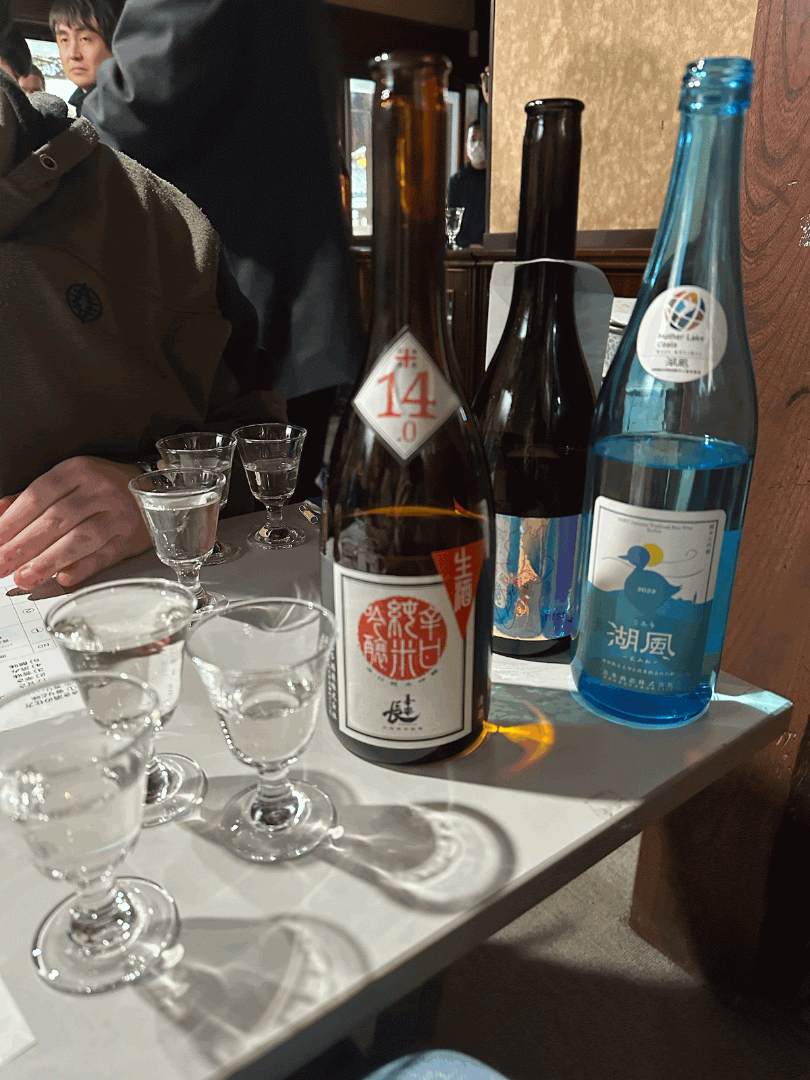
With Lake Biwa and the mountains that surround the prefecture, it ends up being the perfect storm for sake brewing. Shiga currently is home to over 30 different sake breweries, with each individual brewery focusing on different aspects of sake brewing. Sake brewing in Shiga has a long history, with sake being used to entertain merchants on the Nakasendō and the Tōkaidō as they passed through Shiga on their way to Kyotō.
The banner image is also provided by the Biwako Visitors Bureau (公社)びわこビジターズビューロー.

JCMU Application
Portal

Advising
Appointments

Stories &
Testimonials

Program Alerts &
Announcements